
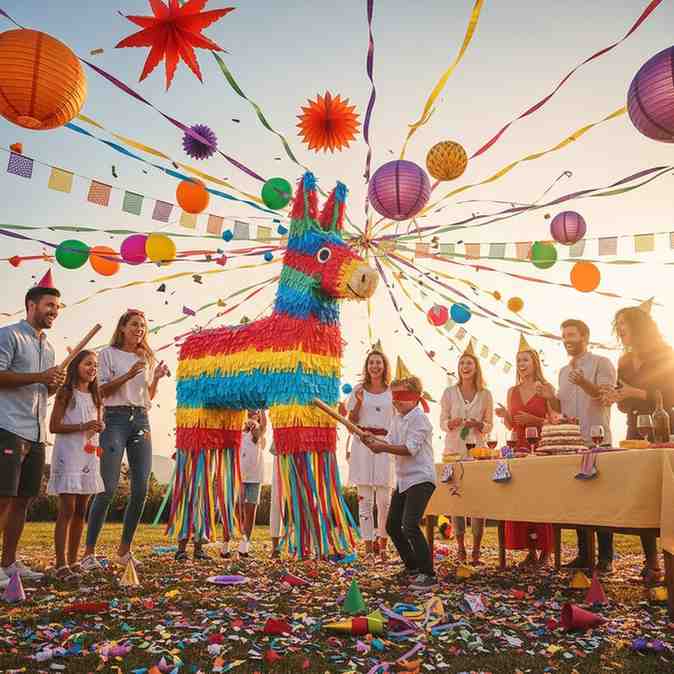
Birthdays are a universal language of joy. Whether you are blowing out candles in Madrid, smashing a piñata in Mexico City, or just sending a heartfelt text to a friend in Buenos Aires, the sentiment remains the same: we are celebrating life.
However, if you have Spanish-speaking friends, family, or colleagues, simply translating “Happy Birthday” from English doesn’t always capture the warmth or the specific cultural nuance you might be looking for. Spanish is a language rich with affection, humor, and distinct regional traditions. A wish for your grandmother should sound very different from a text to your best friend.
This comprehensive guide goes beyond the basics. We will explore how to say happy birthday in Spanish for every scenario, dive into fascinating cultural traditions like ear-pulling and cake-smashing, and ensure you avoid common grammar mistakes.
Ready to become the life of the fiesta? Let’s get started.
The Essentials: How to Say Happy Birthday in Spanish
If you only remember two phrases from this entire article, make it these two. They are the bread and butter of Spanish birthday greetings and will work in 99% of situations.
1. ¡Feliz Cumpleaños!
Pronunciation: Feh-leez koom-pleh-ahn-yos
Translation: Happy Birthday!
This is the gold standard. It is polite, enthusiastic, and appropriate for everyone from your boss to your toddler.
Grammar Note: You might notice the word ends in an “s”. In Spanish, cumpleaños is a compound noun formed by cumple (from cumplir – to turn/fulfill) and años (years). Even if it is just one birthday, the word is always plural in form but singular in usage.
2. ¡Felicidades!
Pronunciation: Feh-lee-see-dah-des
Translation: Congratulations!
While English speakers don’t typically say “Congratulations” on a birthday, it is extremely common in Spanish. It implies you are congratulating them on completing another year of life. You can also expand this to “¡Muchas felicidades!” (Many congratulations).
you also read: happy-birthday-wishes-for-coworkers
Short and Sweet Variations
Sometimes, you just want to keep it casual. Here is how to keep it brief:
| Spanish Phrase | Pronunciation | Meaning | Context |
| ¡Feliz cumple! | Feh-leez koom-pleh | Happy b-day! | Very casual. Use with friends/family. |
| ¡Felicidades en tu día! | En too dee-ah | Congrats on your day! | Warm and friendly. |
| ¡Que los cumplas feliz! | Keh lohs koom-plas… | May you turn them happily! | Often sung or said cheerfully. |
Going Deeper: Wishing Health, Longevity, and Joy
Once you have mastered the basic greeting, you will want to add a “wishing” sentence. In Spanish, we often use the subjunctive mood here because we are expressing a desire or a hope for someone.
Here are the best ways to expand your message:
“Que cumplas muchos más”
Translation: May you turn many more (years).
This is the Spanish equivalent of “and many more!” It is almost automatic to say this right after “¡Feliz cumpleaños!”
“Te deseo lo mejor”
Translation: I wish you the best.
A safe, polite, and caring phrase that works beautifully in birthday cards.
“Que tengas un día maravilloso”
Translation: May you have a wonderful day.
If you want to sound like a native speaker, use the construction “Que + subjunctive verb.” It implies “I hope that…” without having to say the whole phrase.
More wishes to write in a card:
- ¡Que se cumplan todos tus deseos! (May all your wishes come true!)
- Espero que pases un día genial. (I hope you have a great day.)
- Te deseo un año lleno de amor y alegría. (I wish you a year full of love and joy.)
- ¡Salud, dinero y amor! (Health, money, and love! — A classic toast.)
Personalizing Your Message: Family, Friends, and Romance
Context is everything. You wouldn’t sign a card to your romantic partner the same way you would sign one for your accountant. Here is how to tailor your Spanish birthday wishes based on your relationship.
For Your Significant Other (Romantic)
Spanish is a language of romance. Be careful with the difference between Te quiero (I love you/care for you) and Te amo (I love you deeply/romantically).
| Spanish Phrase | Translation | Vibe |
| ¡Feliz cumpleaños, mi amor! | Happy birthday, my love! | Classic romance. |
| Eres el mejor regalo de mi vida. | You are the best gift of my life. | Deeply sentimental. |
| Te amo con todo mi corazón. | I love you with all my heart. | Intense love. |
| ¡Feliz vuelta al sol, mi vida! | Happy trip around the sun, my life! | Poetic and sweet. |
For Your Best Friend (Funny & Casual)
Friendship in Spanish culture often involves teasing and warmth.
- ¡Feliz cumpleaños, viejo/a! (Happy birthday, old man/woman! — Don’t worry, it’s often used affectionately.)
- ¡Vamos a celebrar a lo grande! (Let’s celebrate big time!)
- ¡Que siga la fiesta! (May the party continue!)
- No te preocupes por la edad, el vino mejora con los años. (Don’t worry about age, wine gets better with years.)
For Family (Warm & Respectful)
- Para la mejor mamá/papá del mundo. (For the best mom/dad in the world.)
- Gracias por todo, ¡feliz día! (Thanks for everything, happy day!)
- Te queremos mucho. (We love you very much.)
Formal Birthday Wishes for the Workplace
When addressing a boss, a client, or someone older than you whom you don’t know well, you should switch from the informal tú (you) to the formal usted (you).
The grammar shift is slight but significant:
- Informal: Te deseo (I wish you – familiar)
- Formal: Le deseo (I wish you – formal)
Professional options:
- Le deseo un feliz cumpleaños. (I wish you a happy birthday.)
- Espero que tenga un buen día. (I hope you have a good day.)
- Mis mejores deseos en su día. (My best wishes on your day.)
Social Media Captions: Short & Trendy
Posting a story on Instagram or a status on WhatsApp? You need something punchy. Competitor guides often miss this, but in the digital age, it’s essential.
- ¡Feliz vuelta al sol! ☀️ (Happy trip around the sun!)
- Hoy se celebra. 🥳 (Today we celebrate.)
- Happy B-day a mi persona favorita. (Spanglish is very common online!)
- Sumando momentos. 🎂 (Adding up moments/memories.)
- ¡A por otro año más! 🚀 (Here’s to another year!)
Cultural Traditions: It’s Not Just About the Cake
To truly understand Spanish birthday wishes, you need to understand the party itself. Traditions vary wildly between Spain and Latin American countries.
1. Las Mañanitas (Mexico)
If you are in Mexico, “Happy Birthday to You” isn’t the main event. It’s Las Mañanitas. This is a traditional morning song (though often sung at cake time too) that describes King David singing to the birthday person.
Key lyric: “Despierta, mi bien, despierta, mira que ya amaneció…” (Wake up, my dear, wake up, look it has already dawned…)
2. Los Tirones de Oreja (Spain)
In Spain, watch out for your ears! It is customary to gently (or sometimes not so gently) pull the birthday person’s earlobe—one tug for every year they have turned. Sometimes an extra tug is added for good luck.
3. La Mordida (Mexico & Central America)
This is the moment of truth. After blowing out the candles, the guests will chant “¡Mordida! ¡Mordida!” (Bite! Bite!). The birthday person must take a bite of the cake without using their hands. Usually, a friend or family member will push their face into the cake at this exact moment.
4. The Quinceañera (Latin America)
This is much more than a birthday party; it is a rite of passage. Celebrated when a girl turns 15, it symbolizes the transition from childhood to womanhood. It often involves a religious ceremony followed by a massive reception with choreographed dances, gowns, and toasts.
5. Santo (Name Day)
In Spain and some religious families in Latin America, your “Santo” (the feast day of the Saint you were named after) is almost as important as your birthday. You might hear people say “¡Feliz Santo!” to a specific person even if it’s not their birth date.
How to Respond to Birthday Wishes in Spanish
So, you have received a flood of Feliz cumpleaños messages. How do you respond gracefully?
| Spanish Response | Meaning | Usage |
| ¡Gracias! | Thank you! | Simple and perfect. |
| ¡Muchísimas gracias! | Thank you very much! | More enthusiastic. |
| Gracias por acordarte. | Thanks for remembering. | For close friends. |
| Gracias a todos por los saludos. | Thanks to everyone for the greetings. | Great for a general social media post. |
| Me alegraste el día. | You made my day. | Very sweet response. |
Common Mistakes to Avoid
Even intermediate learners slip up on these subtle points.
1. Don’t confuse “Año” with “Ano”
This is the classic blunder. The tilde (~) over the ‘n’ is crucial.
- Tengo 25 años = I am 25 years old.
- Tengo 25 anos = I have 25 anuses.
Always write the tilde!
2. Don’t say “Soy [number] años”
In English, we say “I am 25.” In Spanish, we use the verb tener (to have).
- Incorrect: Soy 25.
- Correct: Tengo 25 años. (I have 25 years.)
3. Capitalization
In Spanish, we do not capitalize the days of the week or months of the year unless they are at the start of a sentence.
- Incorrect: Mi cumpleaños es en Enero.
- Correct: Mi cumpleaños es en enero.
Wrap Up: Connect Through Language
Learning how to say happy birthday in Spanish is about more than vocabulary lists; it is about connection. Whether you are jokingly calling a friend “viejo” or singing Las Mañanitas at the top of your lungs, these phrases allow you to participate in the joy of the culture.
The next time you see that birthday notification pop up on your phone, skip the generic English post. Try a “¡Felicidades, que pases un día genial!” instead. It’s a small effort that makes a big impact.
Ready to take your Spanish beyond birthday wishes?
Start practicing these phrases today with your friends, or sign up for a language exchange to hear them used in real life. ¡Que tengas un día maravilloso!