

If you have been diagnosed with cataracts, you are likely experiencing a mix of emotions. There is the relief of knowing why your vision has been cloudy or dim, but there is also the anxiety that comes with the word “surgery.” The idea of anyone operating on your eyes can be frightening.
However, cataract surgery is one of the most frequently performed and safest surgical procedures in the world. While medical brochures give you the clinical facts, they often miss the practical, day-to-day nuances that patients actually want to know. From the surprising brightness of the world post-surgery to the specific way you’ll need to wash your hair, there are several details that can make your journey smoother if you know them in advance.
This guide covers the essential insights, practical tips, and honest realities that many patients say they wish they had known before walking into the operating room.
1. The Anticipation is Worse Than the Procedure
The number one thing patients report after the fact is that they wasted too much energy worrying. The psychological build-up is almost always more intense than the surgery itself.
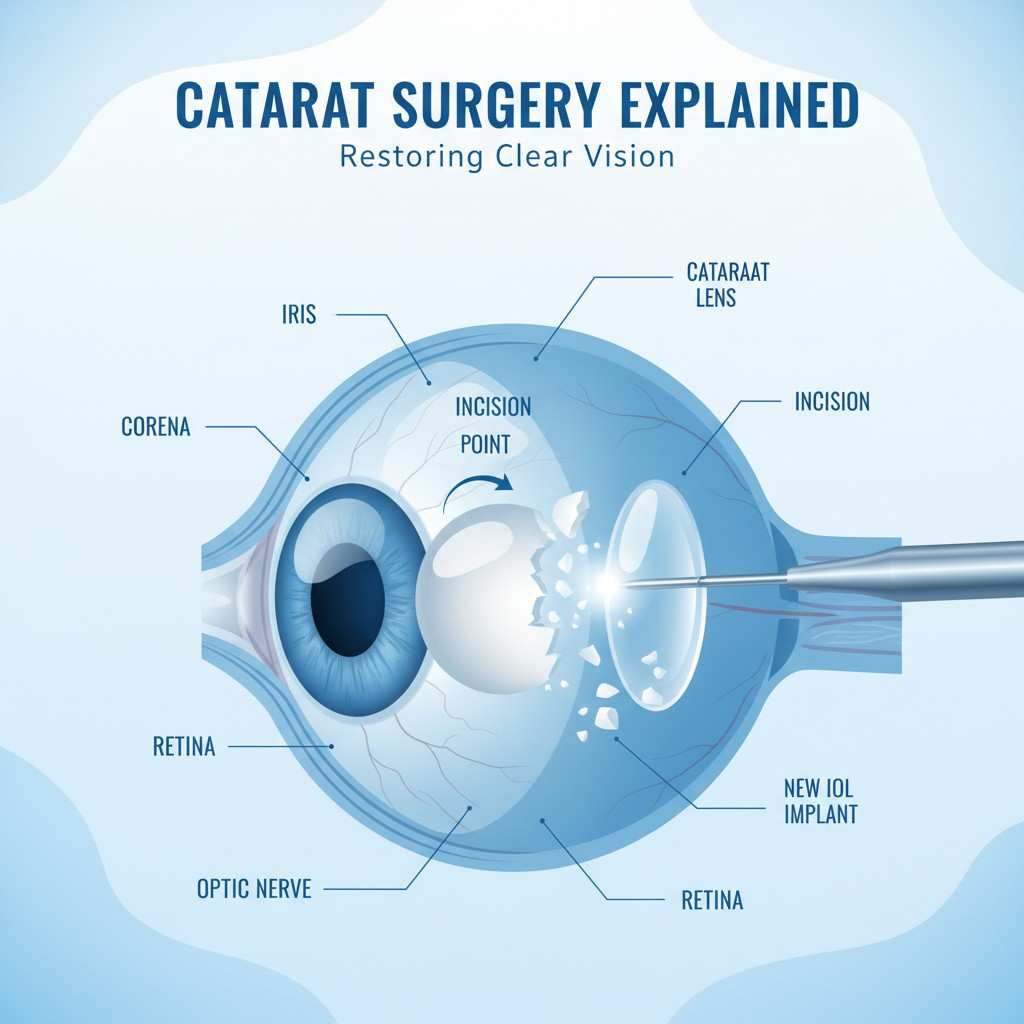
Here is the reality of the timeline: the actual procedure typically takes only 10 to 15 minutes per eye. Including pre-op preparation and post-op recovery checks, you will likely be at the surgery center for a few hours, but the time you spend in the operating room is incredibly brief.
You will be awake, but you won’t be in pain. Numbing drops and mild sedation are used to ensure you are relaxed and comfortable. Most patients describe seeing a kaleidoscope of lights and feeling a bit of pressure, but not pain.
2. Choosing a Lens is the Hardest Decision You Will Make
Before surgery, you won’t just sign a consent form; you will have to make a choice that determines how you see the world for the rest of your life. You need to choose an Intraocular Lens (IOL).
Many patients wish they had researched this more thoroughly beforehand rather than deciding in the doctor’s office. Your choice largely depends on your lifestyle, budget, and tolerance for glasses.
Comparison of Common Lens Options
| Lens Type | Best For | Potential Drawbacks |
| Monofocal (Standard) | Excellent distance vision. Usually covered by insurance/Medicare. | You will likely need reading glasses for near tasks (books, phones). |
| Multifocal (Premium) | Reducing dependence on glasses. clear vision at near and far distances. | Can cause “halos” or glare around lights at night. Higher out-of-pocket cost. |
| Toric | Patients with astigmatism. Corrects the curvature of the eye. | Specifically for astigmatism; doesn’t necessarily correct presbyopia (need for reading glasses). |
| Light Adjustable Lens (LAL) | Patients who want a customized fit. Prescription can be tweaked after surgery using UV light. | Requires multiple post-op visits and wearing UV-protective glasses for several weeks. |
3. The “In-Between” Phase Can Feel Disorienting
If you are having surgery on both eyes, doctors typically do not operate on them the same day. There is usually a gap of one to four weeks between surgeries to ensure the first eye heals without infection.
During this gap, you may experience a phenomenon called anisometropia. This is where your operated eye has clear vision (and perhaps a new focal point), while your unoperated eye still has a cataract and your old prescription.
This imbalance can make you feel:
- Slightly dizzy or off-balance.
- Like your depth perception is off.
- Confused when trying to read, as one eye is struggling.
Pro Tip: Some patients remove the lens from their old glasses for the operated eye or wear a contact lens in the unoperated eye to bridge the gap. Discuss this strategy with your surgeon before your first procedure.
4. The World Will Be Shockingly Bright (and Blue)
Cataracts tend to yellow your vision slowly over time, acting like a built-in sepia filter. Because the change is gradual, your brain adjusts, and you don’t realize how much color vibrancy you have lost.
Once the cloudy, yellowed lens is replaced with a crystal-clear artificial one, the difference is immediate and startling.
- Whites will look brilliant white (sometimes almost too bright).
- Blues and purples will pop in a way you haven’t seen in years.
- Light sensitivity is very common for the first few days or weeks.
You will want to have high-quality sunglasses ready for your ride home and for anytime you go outside during recovery.
5. You Might See Things You Didn’t Want to See
There is a humorous downside to regaining high-definition vision: you will suddenly see the dust on your baseboards, the spots on your carpet, and the wrinkles in the mirror.
Many patients joke that they need to renovate their homes after cataract surgery because they can finally see how much wear and tear has occurred. While this can be a shock, it is a testament to how much vision you are regaining.
6. “Secondary Cataracts” Are a Real Possibility
This is a major point of confusion for patients. You cannot grow a cataract back once the lens is removed. However, you can develop something called Posterior Capsule Opacification (PCO).
This happens when the membrane that holds your new lens in place becomes cloudy. It mimics the symptoms of a cataract (blurry vision, glare) and can occur weeks, months, or even years after surgery.
The good news: This is easily fixed with a procedure called a YAG laser capsulotomy. It takes about five minutes, is painless, and restores vision almost instantly. Knowing this possibility exists prevents panic if your vision gets slightly cloudy down the road.
7. You Need a Plan for Sleeping and Showering
Recovery isn’t painful, but it does require specific lifestyle adjustments that can be annoying if you aren’t prepared.
Sleeping: You will likely be given a plastic shield to tape over your eye at night for the first week. This prevents you from rubbing your eye in your sleep. If you are a stomach sleeper, you will need to practice sleeping on your back or the side opposite your operated eye to avoid putting pressure on it.
Showering: You cannot get tap water, soap, or shampoo in the operated eye for the first week or two, as this carries a risk of infection.
- Tip: Wash your hair the night before surgery.
- Tip: When you do shower post-op, keep your eyes closed and face away from the showerhead, or use dry shampoo and a washcloth for a few days.
8. Eye Drops Will Become Your New Routine
You won’t just be prescribed one bottle of drops. You will likely have an antibiotic drop, an anti-inflammatory drop, and possibly a lubricating drop.
You will need to use these several times a day for a few weeks. If you struggle with putting drops in your own eyes, or if you have arthritis that makes squeezing small bottles difficult, you must arrange for help.
Safety Note: If you use multiple drops, you generally need to wait 5 minutes between each type to ensure they don’t wash each other out.
9. Your Vision Fluctuates During Healing
Don’t panic if your vision is great the day after surgery but slightly blurry three days later. Your eye is healing. There is inflammation, your pupil might still be dilated, and your brain is adjusting to the new optics.
It typically takes four to six weeks for your eye to fully stabilize. This is why doctors won’t give you a prescription for new glasses (if you need them) until about a month after your second eye is done.
10. You May Still Need Glasses (and That’s Okay)
Even with premium lenses, there is a chance you will need glasses for specific tasks.
- If you choose monofocal lenses set for distance, you will definitely need readers for menus and phones.
- If you choose monovision (one eye for distance, one for near), you might still need glasses for night driving.
Going into surgery with the expectation of “never wearing glasses again” can lead to disappointment. Aim for “reduced dependence” on glasses instead.
11. Household Prep is Essential
For the first week, you will have restrictions on lifting (usually nothing over 10-15 pounds) and bending at the waist. Bending over increases pressure in the eye, which can affect the incision.
Preparation Checklist:
- Move frequently used items (coffee mugs, toiletries) to counter height so you don’t have to bend down.
- Do your heavy laundry and vacuuming before surgery.
- Pre-cook a few meals so you aren’t standing over a hot stove immediately after coming home.
- Clear walkways of tripping hazards (rugs, cords) since your depth perception might be temporarily compromised.
you also read: things-i-wish-i-knew-before-shoulder-surgery
12. The Emotional Impact is Significant
Finally, many patients are surprised by the emotional weight of the process. There is the anxiety beforehand, but there is often an emotional release afterward.
Regaining your sight is a massive quality-of-life upgrade. Being able to read a book comfortably, drive safely at night, or see the faces of loved ones clearly again can be overwhelming in the best way possible. Acknowledge that this is a big life event, and give yourself grace during the adjustment period.
Conclusion: A Journey Worth Taking
Cataract surgery is a marvel of modern medicine. It is quick, effective, and life-changing. While the preparation and recovery require some diligence, the reward—clear, vibrant vision—is worth every drop of effort.
By understanding the lens options, preparing your home, and managing your expectations regarding recovery, you can approach your surgery date with confidence rather than fear.
Are you ready to see the world clearly again?
If you are noticing cloudy vision or difficulty seeing at night, don’t wait until it affects your quality of life. Schedule a comprehensive eye exam today to discuss your options.
Frequently Asked Questions
Is cataract surgery painful?
No. You are given numbing eye drops and often a mild sedative to help you relax. You may feel slight pressure or sensation during the procedure, but it is generally not painful. Some mild scratching or grittiness during the first few days of recovery is normal.
How long does it take to recover?
Most people see a significant improvement in vision within 24 to 48 hours. However, full healing takes about 4 to 6 weeks. You can usually return to light daily activities within a day or two, but you must avoid heavy lifting and swimming for a few weeks.
Can I drive myself home after surgery?
No. Your vision will be blurry, and you may be groggy from the sedation. You must arrange for a friend, family member, or medical transport service to drive you home. You can typically resume driving once your doctor clears you at your follow-up appointment, often within a few days.
Will insurance cover my surgery?
In most cases, yes. Medicare and private insurance typically cover standard cataract surgery with a monofocal lens. If you choose premium lenses (like multifocal or toric lenses) or laser-assisted surgery, you will likely have to pay the difference out-of-pocket.