

Every year, thousands of patients undergo shoulder surgery to repair torn rotator cuffs, fix fractures, or replace worn-out joints. While surgeons are experts at repairing the anatomy, they don’t always have time to explain the nitty-gritty details of daily life during recovery.
You might know what the surgery is, but do you know how you’re going to brush your teeth with your non-dominant hand? Do you know how to sleep comfortably when you can’t lie flat?
If you are scheduled for a procedure, you might be feeling a mix of relief and anxiety. That is completely normal. To help you prepare, we have compiled the essential insights—the practical, day-to-day realities—that many patients say they wish they had known before walking into the operating room.
Why is preparation so important?
The shoulder is the most mobile joint in the human body, but that mobility comes at a cost: stability. Whether you are having a rotator cuff repair, arthroscopy, or a total shoulder replacement, the recovery is rarely a straight line.
Unlike a knee or hip surgery where you might be up and walking quickly, shoulder surgery requires you to immobilize a major part of your upper body. This affects your balance, your sleep, and your ability to perform basic self-care. Going in blind can lead to frustration, but going in with a plan can make your recovery smoother and faster.
1. What should I buy before surgery? (The Shopping List)
You don’t want to be scrambling to order supplies online when you are groggy from anesthesia. Your home needs to be “one-hand friendly” before you leave for the hospital.
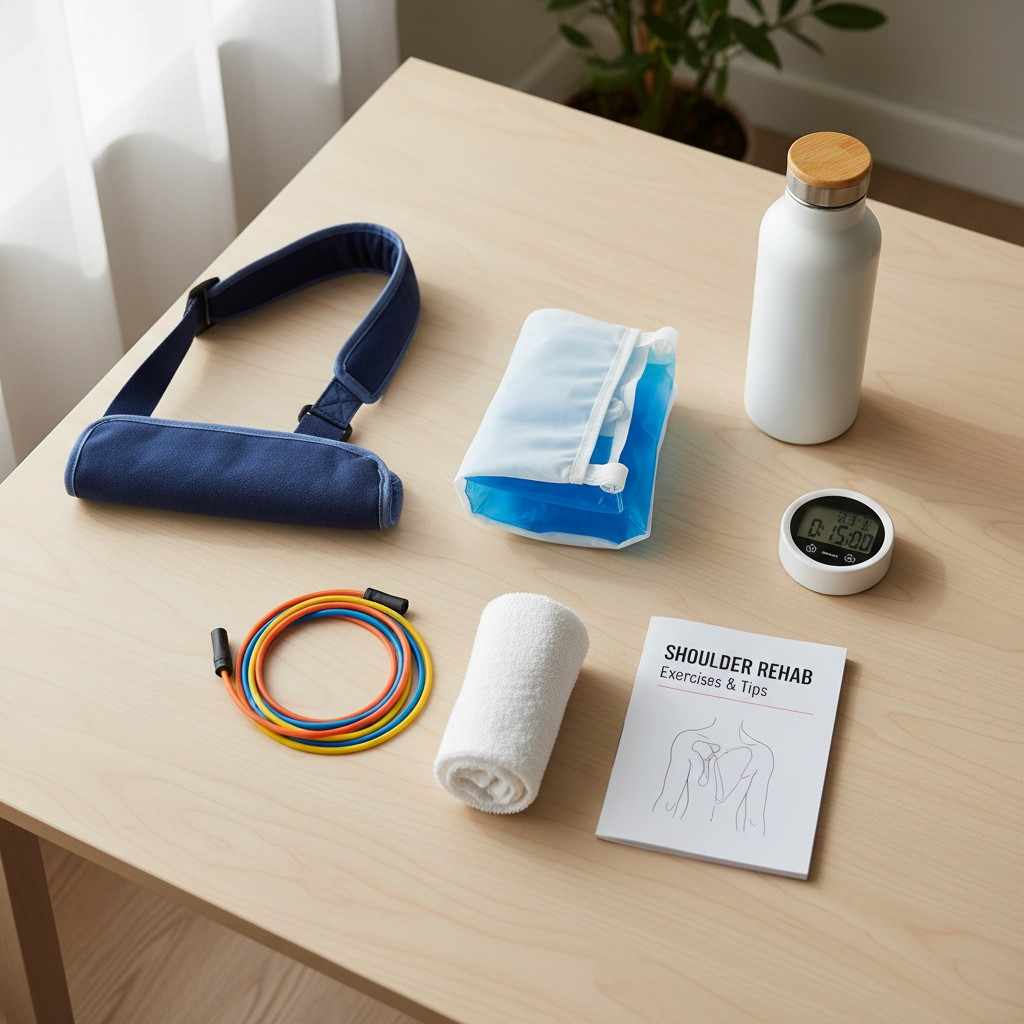
Many patients regret not having these items ready on Day 1:
| Item | Why you need it |
| Pump Soap | You cannot hold a bar of soap or squeeze a bottle with one hand. |
| Slip-on Shoes | Tying laces is impossible. Look for Velcro or sturdy slip-ons. |
| Loose Button-Down Shirts | You cannot pull shirts over your head comfortably for weeks. |
| Shower Chair/Stool | Showering can be exhausting and slippery; sitting is safer. |
| Detachable Shower Head | Makes rinsing easier when you can’t turn your body easily. |
| Stool Softeners | Pain medication often causes severe constipation. |
| Wedge Pillow | Essential for sleeping in an upright position. |
2. What happens when the nerve block wears off?
This is perhaps the single most common “I wish I knew” moment for patients.
During surgery, your anesthesiologist will likely perform a nerve block. This numbs your shoulder and arm, meaning you will wake up from surgery feeling surprisingly good—perhaps with no pain at all. This can last for 12 to 24 hours.
The Reality Check:
When the block wears off, the sensation returns quickly, and often intensely. This is known as “rebound pain.”
The Strategy:
Do not wait until you feel pain to take your medication. If your surgeon prescribes pain relief, take it before the block wears off (usually before you go to sleep on the first night). Staying “ahead of the pain” is much easier than trying to catch up once it becomes severe.
you also read: 150+ Best Birthday Wishes for Sister: Funny, Heartfelt & Short Quotes
3. How on earth do I sleep with a sling?
If you are a side sleeper or a stomach sleeper, you need to prepare yourself: you will likely be sleeping on your back or in a reclined position for several weeks. Laying completely flat can pull on the repair and cause throbbing pain.
Creating a “Sleep Nest”:
- The Recliner: Many patients find it easiest to sleep in a recliner chair for the first 1 to 2 weeks. It keeps you upright and prevents you from rolling onto your injured shoulder.
- The Pillow Fort: If you must sleep in a bed, prop yourself up with a wedge pillow or a stack of firm pillows. Place a pillow under your operative arm to support the elbow—if your elbow drops back, it strains the shoulder.
- The Barrier: Place a pillow on your non-operative side to stop yourself from rolling over in your sleep.
4. How do I shower and dress one-handed?
Simple tasks become strategic operations when your dominant arm is strapped to your chest.
Showering:
You will likely need to keep your incision dry for the first few days. Once cleared to shower, you may be terrified to take the sling off.
- The Pendulum: Let your operative arm hang straight down (like a pendulum) to wash under your armpit. Do not use your shoulder muscles to lift the arm.
- The Waist Strategy: Wear a belt or a lanyard in the shower to loop your arm thumb through if you feel the weight of your arm is too heavy to let hang.
Dressing:
- The “Operative First” Rule: Always put your operative (surgery) arm into the sleeve first. Then, pull the shirt across your back and put your good arm in.
- Undressing: Do the reverse. Take your good arm out first, then gently slide the shirt off the operative arm.
- Clothing Choices: Oversized t-shirts, zip-up hoodies, and elastic-waist pants are your best friends. Avoid zippers and buttons on pants if possible.
5. What is the “Sling Life” really like?
Your doctor might tell you that you need to wear a sling for 4 to 6 weeks. Hearing that is one thing; living it is another.
The Mental Toll:
The sling is cumbersome. It gets hot. It throws off your walking balance. You may feel clumsy because your center of gravity has shifted.
Hand Swelling:
It is very common for the hand and fingers on your surgery side to swell. This is because the muscles aren’t pumping fluid back up the arm.
- Tip: Squeeze a stress ball or make a fist repeatedly with your hand (while in the sling) to help pump fluid out.
- Tip: Take your arm out of the sling (supported by a pillow) and elevate it above your heart when sitting on the couch.
6. How do I manage hygiene and toileting?
This is the question everyone has but is too embarrassed to ask. If your surgery is on your dominant side, bathroom hygiene will be a challenge.
The Reality:
You will need to learn to use your non-dominant hand.
- Practice Early: If you know your surgery date, start practicing tasks with your non-dominant hand now (brushing teeth, wiping, eating).
- Equipment: Some patients find a bidet attachment for their toilet to be a life-saver during the first few weeks of limited mobility.
7. How long until I can drive?
You might think, “I can drive with one hand!” But this is dangerous and often illegal.
The Rules:
- No Narcotics: You cannot drive while taking opioid pain medication.
- No Slings: You generally cannot drive while wearing a sling. If an airbag deploys while you have a sling on, the damage to your shoulder could be catastrophic.
- The Timeline: Most patients are not cleared to drive for at least 6 weeks, especially after a rotator cuff repair.
Plan Ahead:
Arrange rides for your follow-up appointments and physical therapy sessions. Do not assume you will be “up to it” after a week.
8. Is physical therapy actually that hard?
Surgery fixes the damage, but Physical Therapy (PT) restores the function. PT is not just “exercise”; it is a vital medical treatment.
The “Frozen” Risk:
If you don’t move the shoulder, it can freeze (adhesive capsulitis), which can be more painful than the surgery itself. Conversely, if you move it too much, you can tear the repair.
The Marathon Mindset:
- Phase 1 (Passive): The therapist moves your arm for you. Do not help them! Relax and let them do the work.
- Phase 2 (Active-Assisted): You help move the arm with pulleys or sticks.
- Phase 3 (Strengthening): This comes much later (usually 12+ weeks).
Insight: PT can be painful, but it is a “good hurt.” Be consistent. Patients who skip PT almost always regret it later due to stiffness and limited range of motion.
9. What about work and typing?
In the age of remote work, many people assume they can be back on their laptop in 3 days.
The Reality:
Typing requires you to hold your arms out slightly. Even if your hands are on the keyboard, your shoulder muscles are engaging to hold your arm in that position.
- Fatigue: Your shoulder will get tired and ache very quickly.
- One-Handed Typing: You may be typing one-handed for a few weeks.
- Timeline: Desk workers often need 2–4 weeks off or modified duties. Manual laborers may need 3–6 months.
10. The mental game is harder than the physical one
Recovery is boring. It is frustrating. You will drop things and be unable to pick them up. You will need to ask for help with simple things like cutting a steak or tying a shoe.
The “Blues”:
Post-surgery blues are real. The combination of anesthesia, pain meds, disrupted sleep, and isolation can lower your mood.
- Stay Social: Invite friends over, even if you are just sitting on the couch.
- Celebrate Small Wins: The first day you can shower without a chair. The first day you can sleep in a bed. These are milestones.
Conclusion
Shoulder surgery is a journey, not a sprint. While the first few weeks can be challenging, being prepared with the right equipment and the right mindset makes a world of difference. Remember that the temporary discomfort is the price of admission for a functional, pain-free shoulder in the future.
If you are experiencing shoulder pain or have questions about an upcoming procedure, don’t rely on guesswork. Get professional advice tailored to your specific injury.